Discovery guide · household helpers
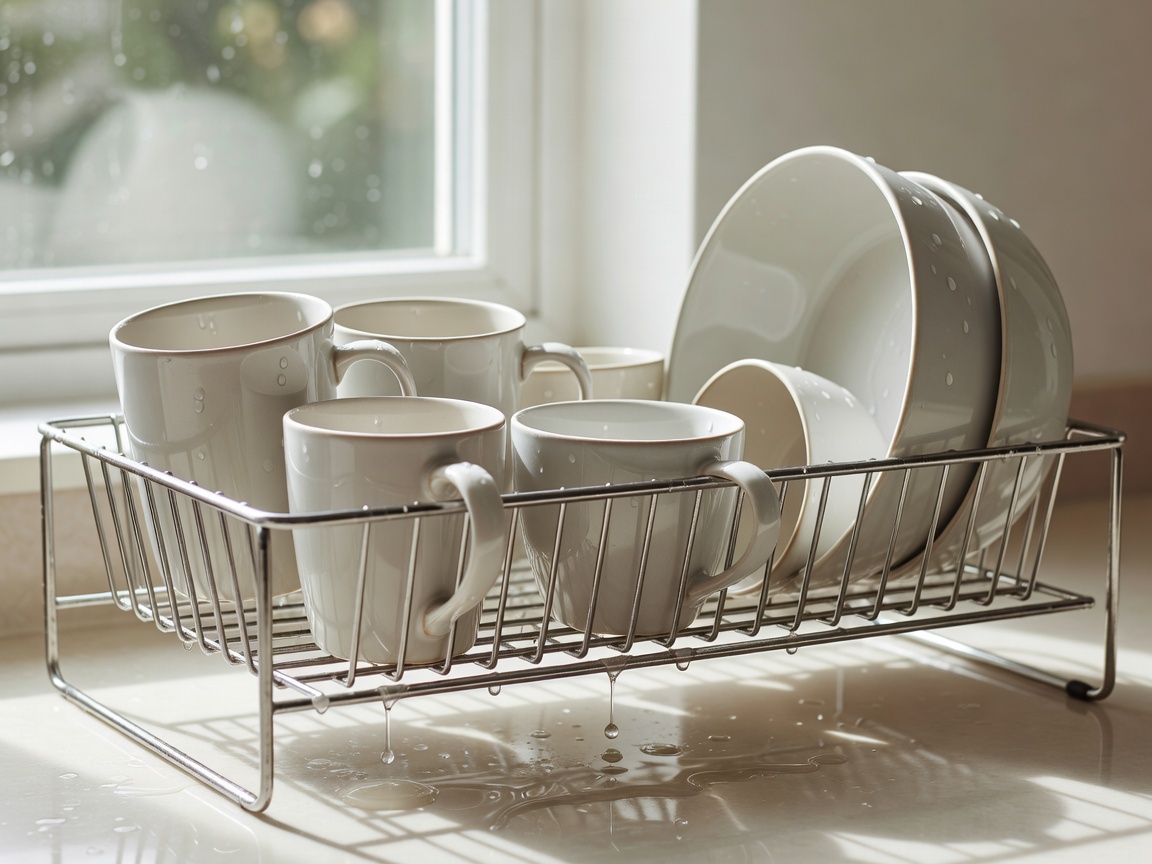
A drying rack that rolls away sounds like a small domestic magic trick. In a crowded kitchen, it can also be a sensible response to a familiar irritation: clean dishes occupying the only useful patch of counter.
Household helpers deserve a tougher question than “does it fit in the room?” They must fit the routine. A rack that blocks the tap, a divider that steals drawer depth or a light that constantly needs charging can trade one nuisance for another. Start by observing the task at its busiest, not when the room is perfectly staged.
The over-sink rack: borrow space carefully
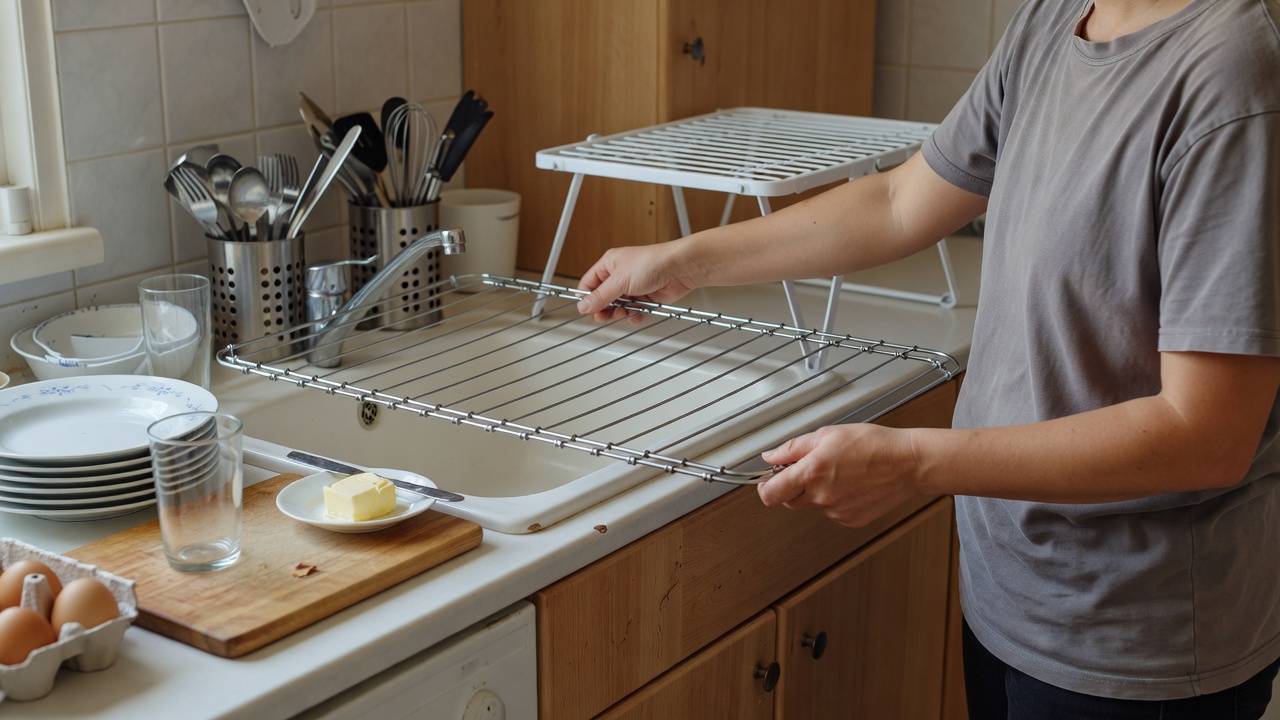
A roll-up rack spans part of a sink, giving dishes somewhere to drain without permanently occupying a countertop. Measure the full support span and the usable sink opening. Check that both ends sit securely and that the product's stated load limit suits the intended use. An overhanging edge or a slippery support is a reason to stop, not improvise.
Then run an imaginary washing-up session. Can you still turn the tap, rinse a large pan and reach the drain? Can water drip directly into the basin? A rack that solves drying but makes washing awkward may be a poor trade in a one-basin kitchen.
The conventional alternative is a freestanding rack; the cheaper one may be an absorbent mat used according to its care instructions. A mat consumes counter space and needs washing and drying. A fixed rack occupies more room but may handle plates more securely. There is no universal winner: choose around the objects you actually wash and the space you genuinely have.
Organise the contents before the drawer
Adjustable dividers promise order without rebuilding the storage. They are most useful when a drawer contains a few stable categories that keep sliding into each other. First remove duplicates and items that belong somewhere else. Buying a grid around unnecessary contents makes clutter more expensive, not less cluttered.
Measure internal width, depth and usable height, including any obstruction from rails or the underside of the counter. Spring-loaded dividers may move or mark delicate finishes; rigid trays can leave unusable strips around their edges. Neither approach is automatically renter-friendly or furniture-friendly.
Try a layout with clean boxes before purchasing permanent components. Use temporary materials only where they are appropriate: cardboard is a poor choice near moisture or where hygiene requires a washable surface. The trial is about learning which compartments you need, not proving that every reused container belongs in a kitchen.
A dark cupboard does not always need smart lighting
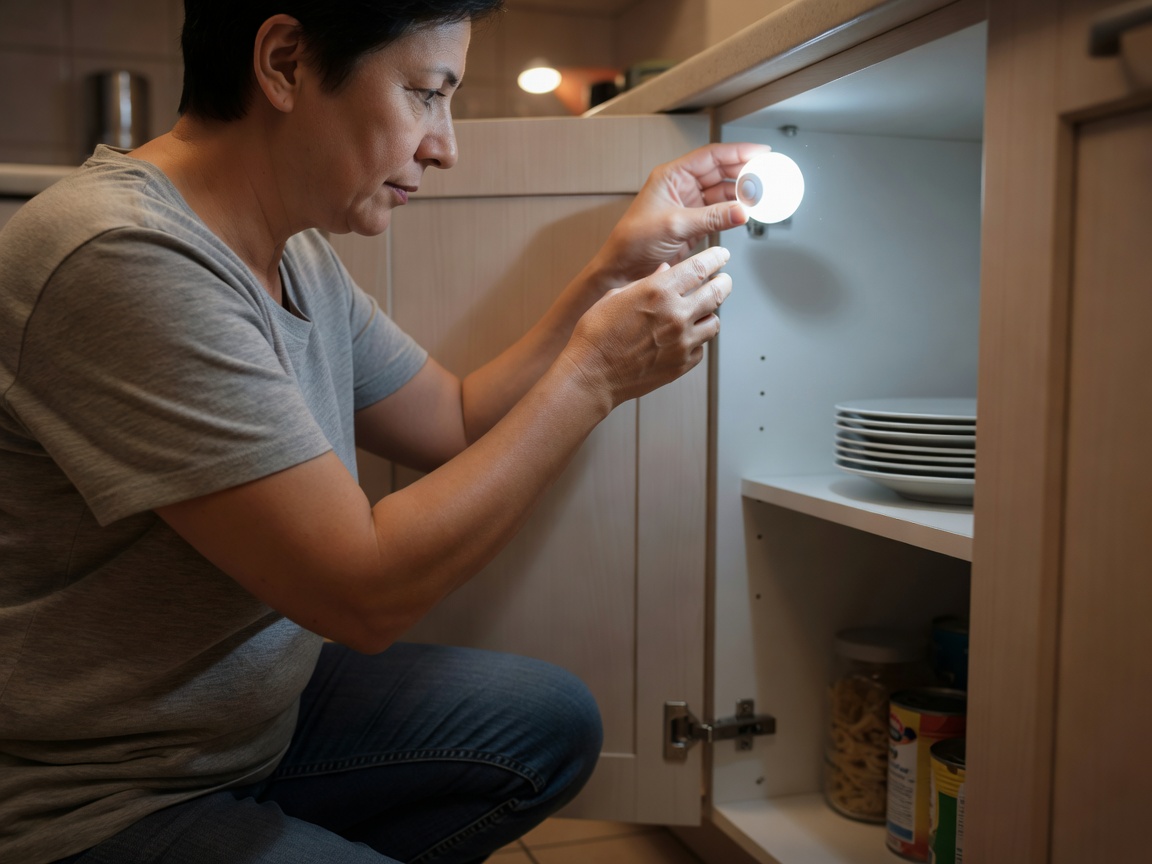
A small motion-triggered light can make a deep cupboard easier to use without a complicated installation. Before choosing one, check whether relocating objects or improving the room's existing light solves the problem. If not, inspect the mounting method, detection range, charging access and intended environment.
Adhesive mounts can fail or damage finishes, and rechargeable lights require a routine for removing and replenishing them. Battery-powered products add replacement costs and disposal considerations. Do not install an indoor light in a damp location unless the manufacturer explicitly rates it for that use. An IP rating describes defined enclosure protection; it is not a blanket promise of suitability everywhere.
The cleaning tax is real
A helpful household object should be easy to inspect and maintain. Look at joints, hollow sections, removable pads and places where water can collect. A rack that folds neatly may still trap residue between parts. A drawer insert that cannot be removed easily can turn a quick wipe into a small dismantling project.
Read the actual care instructions rather than guessing from the material. Dishwasher suitability, temperature limits and cleaning-agent restrictions can differ across components. Avoid treating broad claims such as “antibacterial” as a replacement for ordinary cleaning or appropriate food handling.
Choose a home before bringing it home
Consider where the helper waits between uses. A collapsible product is not truly compact if it must stay unfolded to dry, and a light is not conveniently rechargeable if its cable cannot reach a safe charging position. Shared homes also need shared understanding: everyone should know how the tool is fitted, cleaned and stored.
Our editorial preference is for removable, understandable solutions that address recurring friction. A permanent fitting may still be the right choice when use is frequent and installation is suitable. The point is not to avoid every object. It is to ensure that each new object removes more household work than it quietly creates.