Discovery guide · everyday gadgets
The jar will not open. A small rubber sheet looks almost too ordinary to be the answer. That is precisely why it deserves a look before the countertop machine: useful inventions do not always need an impressive silhouette.
A single-purpose gadget should solve a recognisable problem, fit the person using it and remain convenient after its first demonstration. The sensible comparison includes doing nothing, changing technique and using an existing tool. Buying becomes interesting only when those approaches leave a real problem unresolved.
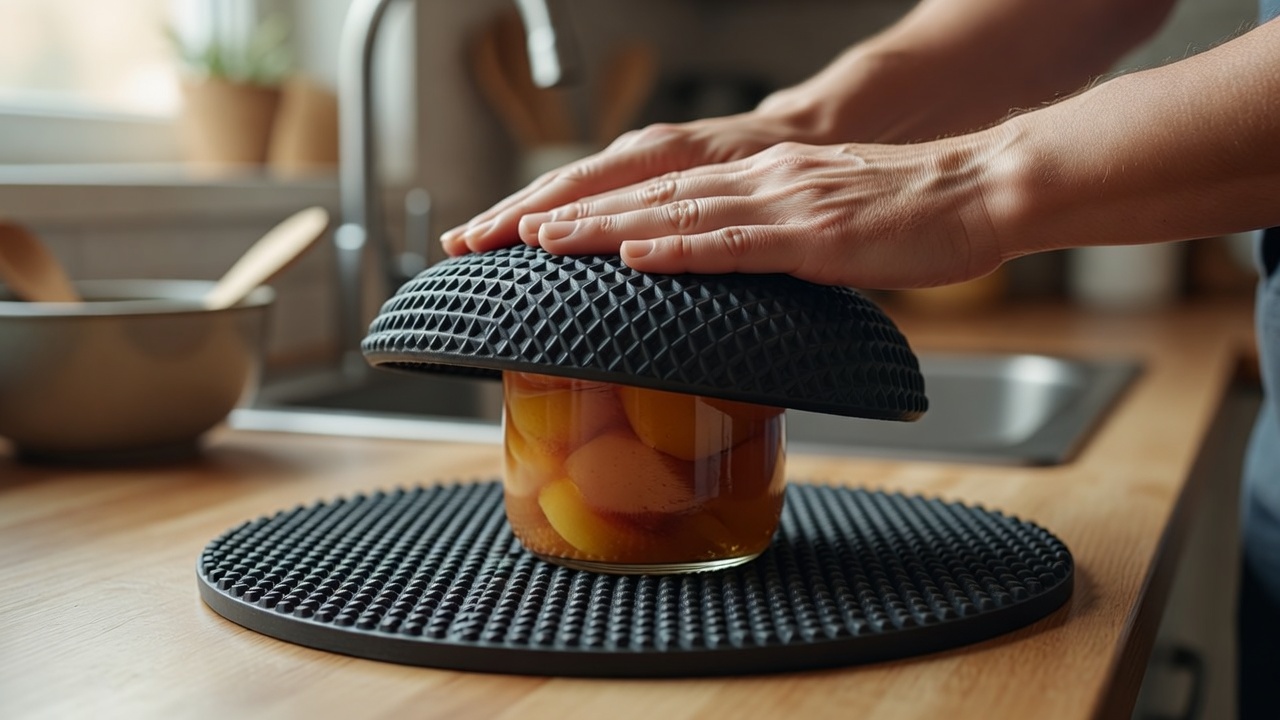
A jar opener has more than one job
A flexible grip mat increases contact between a hand and a lid. It stores flat and can suit occasional stubborn jars. It does not remove the need to grip, stabilise the container or apply turning force. A product that helps one person may still be uncomfortable or unusable for someone else.
A lever-style opener or adjustable handle changes the mechanics. It may provide more leverage, but the jaws need to fit the lid securely, and the container must remain stable. An under-cabinet model can reduce the need to hold the lid, yet introduces installation and clearance requirements. Powered openers add batteries or charging and can struggle with lids outside their stated range.
Our starting order for someone with adequate grip and only occasional difficulty is a grip mat, then a suitable mechanical opener, then powered assistance if it addresses an unmet need. That order is not an accessibility prescription. If pain, weakness or restricted movement is involved, prioritise the individual's needs and seek qualified advice where appropriate.
Packaging: control beats spectacle
Awkward plastic packaging invites improvised solutions. A compact package opener with a guarded blade may offer more controlled access than a large exposed blade, but “guarded” does not mean harmless. Follow its instructions, cut away from the body and keep fingers outside the cutting path. Keep sharp tools away from children.
For paper tape and ordinary cartons, suitable scissors or a tool you already use may be enough. Thick clamshell packaging is a different task, and the correct tool depends on the material. A tiny blade advertised for letters should not be assumed suitable for rigid plastic. If packaging requires force, stop and reconsider the method rather than escalating pressure.
Look for a comfortable grip, a clearly described intended use and a safe storage arrangement. Replaceable blades can extend useful life, but only when replacement parts remain available and changing them is straightforward. A cheap sealed tool may become disposable once the edge wears.
Reach farther without lifting more
A reaching tool can retrieve a lightweight object without bending or stretching. Compare jaw shape, handle force, length and the manufacturer's load limit. A narrow claw may lift keys but fail around a broad packet; a long shaft can become awkward in a small cupboard.
Do not treat a reacher as a substitute for safe access to a heavy, hot, sharp or fragile object. It is not a support rail, and it should not be used near electrical hazards. Before buying one for household organisation, try moving frequently used items to an accessible shelf. Rearrangement can remove the problem entirely.
Give the gadget an ordinary-day audition
Imagine the whole sequence: find it, set it up, perform the task, clean it and put it away. If the tool saves one movement but creates several others, its value depends on frequency and need. A specialised aid can still be worthwhile when it enables a task someone could not otherwise do; convenience is not the only valid benefit.
Check seams, removable parts and cleaning instructions. Food-contact items need appropriate manufacturer guidance; a vague claim of “premium material” tells you little about intended use. Do not assume that silicone, stainless steel or a dishwasher icon elsewhere in a listing applies to every component.
Finally, identify where it will live. A flat grip mat near the jars is more likely to help than a complicated opener buried behind a mixer. The most useful oddity is not the one you remember seeing online. It is the one you actually reach for when the irritation returns.